Why So Many Renovated Homes in Portland Still Feel Soulless. And Why They Sit on the Market I Portland Homes Portland, Oregon
You've walked through it already. Maybe more than once this month. The listing photos looked good — bright, clean, that same soft warm-gray everyone's using right now. Quartz on the counters. New floors. You walked in expecting to feel something.
And you didn't.
That's the part nobody warns you about. Nothing was technically wrong with the house. The bathrooms were redone. The kitchen had an island. You checked every box on your list and you still stood there thinking: this isn't it. Then you left and told your partner the same thing you've told them about the last five houses — it's not a bad house. There's just something missing.
If that's been happening to you, I want you to hear this clearly: you're not being too picky, and you haven't lost your ability to know what you want. You're picking up on something real. A lot of renovated homes in the Portland market right now are sitting — not because the market is slow, and not because buyers are impossible to please. They're sitting because the homes themselves have nothing to say.
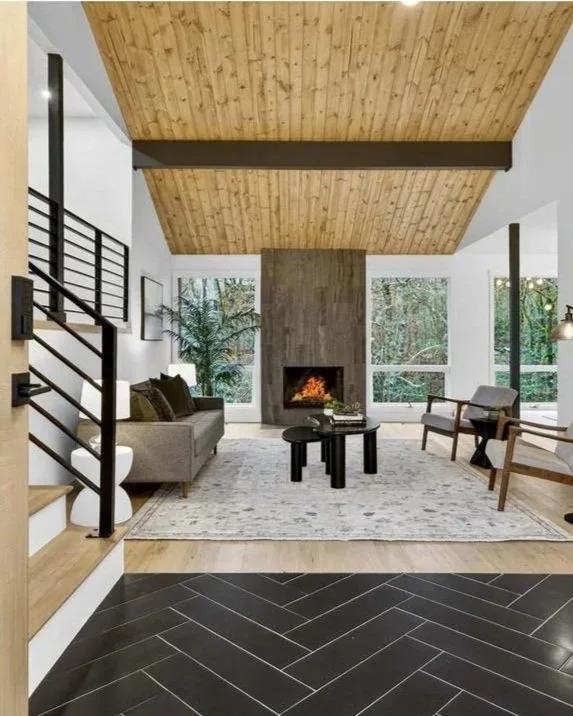
What's Actually Happening Inside These Renovations
Here's what I've noticed, project after project, comp after comp: most people who renovate a house only look at what's inside the walls. They walk in, see a dated kitchen or a tired bathroom, and think, I can fix that. Then they get started. What they don't do — and this is the part that changes everything — is step back and look at the whole property as one decision. The street it's on. The size of the lot. Whether it's two doors down from a neighborhood nobody's touched yet, or it's sandwiched between two new builds. Whether the light actually gets into the rooms they're about to spend the most money finishing.
I was looking at comps for my last project and found exactly this: a genuinely beautiful interior — high-end finishes, the whole thing — sitting on a tiny lot on a busy street. If I were the one buying that property, I wouldn't have gone that high-end on the finishes at all, because I don't think buyers are going to pay top-of-market price for a location with that many compromises. The renovation was disconnected from the reality of the property it was sitting inside. That disconnect is what people feel. They just don't have the language for it yet.
The Aha Moment on Lake Oswego
On my current Lake Oswego project, we walked in and the kitchen was the whole problem. Tiny. Closed off. Low ceilings pressing down on the one room that's supposed to be the heart of the house. It would have been easy to just pick nicer cabinets and call it done — that's what most renovations do. Instead, I stood there and thought: the back door is in the wrong place. If we move it out of the kitchen and into the sitting room next to it, the whole kitchen opens up. That one move gave the room back its air.
That's the difference between updating a house and actually reading it. A lot of renovators are solving for “what's wrong with the finishes.” I'm solving for what's actually broken about how the house lives — and most of the time, it isn't the finishes at all.
Soullessness Isn't Just About What Got Stripped Out
We usually talk about soullessness as character getting ripped out — the built-ins, the cedar shake, the crown molding, the story a home used to carry. That's true, and it matters. But there's a version of soullessness that's quieter and just as damaging: a home that was decided on without ever considering the person who'd actually live in it.
I walked a property once as a possible wholesale purchase where, instead of a closet in each bedroom, there was a door that opened into a tiny room, and then another door that opened into the actual bedroom. We didn't buy it. Not because the bones were bad — because whoever renovated it last assumed the next family would make the exact same compromise the current family had been living with. Nobody asked whether that was actually usable. Nobody asked if it needed to be different.
That's the soullessness you feel and can't name. A house doesn't have to lose its crown molding to feel hollow. It feels hollow because someone decided on renovations based on the sale without thinking about who was going to live it and how their life needs to feel.
What makes a renovated home feel soulless?
A renovated home feels soulless when the person renovating it only solved for the finishes — new counters, new paint, new floors, without solving for the whole picture: the lot, the street, the light, the layout, and whether the space will actually work for the family who lives there next.
The finishes can be flawless and the house can still feel empty because nothing about it was decided with a real person in mind.
Why I Look at the Whole Property Before I Touch a Single Wall
Before I make an offer on anything, I walk it and ask myself questions most flippers skip entirely. Is the location actually ideal, or are there compromises nobody can fix no matter how good the renovation is — a busy street, a lot backing up to something loud, a neighborhood that's mostly still original where this would be the first finished home on the block? Then, and only then, do I look inside and ask what's actually broken — not “what's outdated,” but what is it about this layout that's keeping people from picturing their life here.
It doesn't matter how beautiful I make the inside of a house look if it sits on a road nobody wants to live on. That's not something tile can fix. I'd rather know that up front and price accordingly than pretend a gorgeous kitchen erases a bad location. The finishes should match the reality of the property, not the fantasy of the comps.
And once I know the bones are right, I look for the one place I can take a risk — a bold wallpaper wall, an unexpected tile, finishing the top of a window seat so it becomes a bench somebody will actually sit in with their coffee. Not everywhere. One place. Enough to make someone stop and feel like this home has a point of view, instead of finishes that could belong to any house, anywhere.
What This Means for You
Next time you walk through a renovated home, yours to consider buying, or one you're touring out of curiosity, notice whether the decisions feel like they were made for the house, or made for the market.
Does the finish level match what the lot and the street can actually support? Does the layout solve a real problem, or did someone just repaint around it?
You'll start to see it everywhere once you know what to look for. And you'll understand why so many “perfect on paper” houses left you standing there feeling nothing.
If you've been looking for months and keep leaving open houses with that same almost-but-not-quite feeling, it's not you.
You just haven't walked into a home yet where someone thought about the whole picture, not just the walls. That's what I build.
